Choosing a copper kitchen faucet comes down to five questions: is it solid copper or only a copper-coloured finish, does it fit your sink and countertop, what is inside the body, do you want a living or a sealed finish, and who will install it? Get those right and a copper faucet can be the hardest-working and best-looking piece in your kitchen for decades. This guide walks through each point so you can buy with confidence instead of guessing from product photos.
Solid copper or copper finish: know what you are buying
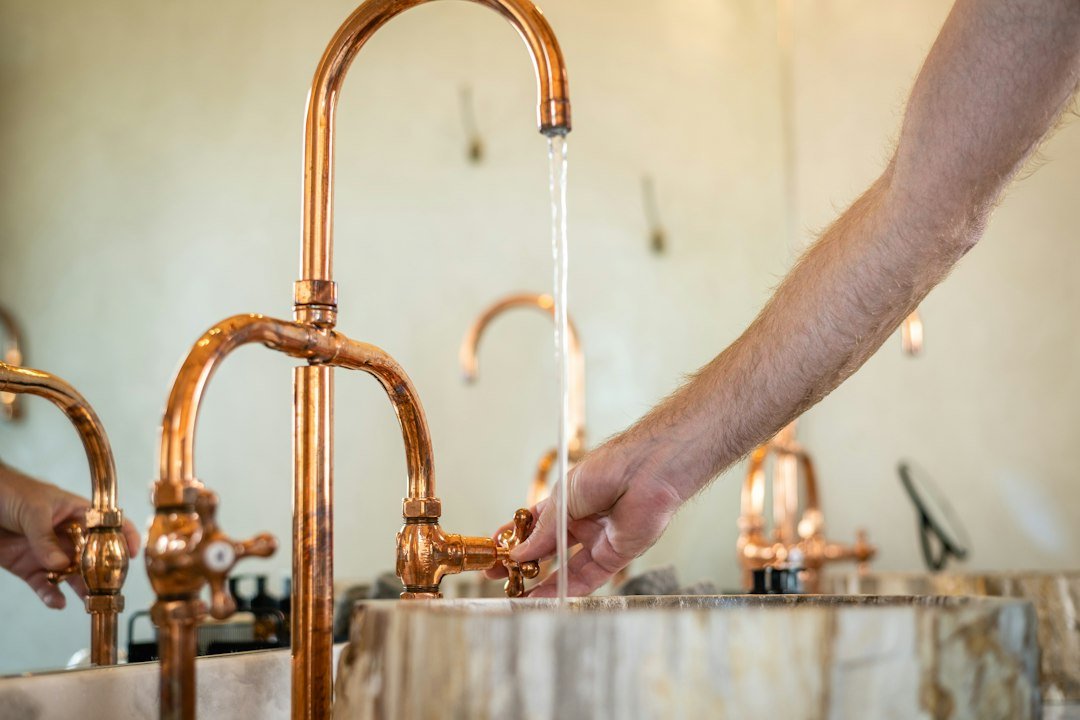
The word “copper” is used loosely in kitchen hardware. Many faucets sold under that name are brass or stainless steel with a copper-toned plating or powder coat. Those can look good on day one, but a plated surface can scratch or wear through over time, revealing a different metal underneath, and it will never develop a real patina.
A solid copper faucet is a different object. The colour goes all the way through, so scratches can be blended back in, and the surface reacts naturally to air, water and hands. Before you buy, look for clear answers to these questions:
- What is the visible body made of? Solid copper, copper-plated brass, or a coated alloy?
- What is in contact with the water? The internal waterways and valve are often a different material from the outer shell, and that is normal.
- Is the finish raw, patinated or lacquered? This decides how the faucet will age.
A seller who knows their product should be able to answer all three plainly. Vague wording such as “copper look” or “copper tone” usually means a finish, not the metal itself.
Match the copper kitchen faucet to your sink and countertop
The most beautiful faucet is the wrong faucet if it does not fit. Check these practical points before falling in love with a design:
- Mounting type. Deck-mounted faucets sit on the sink or countertop; wall-mounted faucets come out of the backsplash and need supply lines inside the wall, which is usually a bigger job.
- Number of holes. Count the holes already drilled in your sink or worktop. A single-hole faucet can often cover extra holes with a deck plate, but a three-hole bridge faucet needs three holes at the right spacing.
- Spout height and reach. A tall gooseneck makes it easier to fill large pots, but can splash in a shallow sink. The stream should land near the centre of the bowl, not on the back edge.
- Handle layout. A single lever lets you adjust temperature with one hand; two handles or a bridge design suit traditional and farmhouse kitchens. Make sure the handle has room to swing without hitting the wall or a window sill.
- Connections. Thread standards and hose fittings vary between countries. Ask what connections the faucet uses so your plumber can plan adapters if needed.
Measure twice: the distance from the faucet hole to the wall, the depth of the sink, and the height of any window or shelf above it.
Look inside: valves, cartridges and water safety
What you cannot see matters as much as the hammered surface you can. Ask what type of valve the faucet uses; ceramic disc cartridges are widely used in modern faucets because they are durable and easy to replace. Ask too whether replacement cartridges or washers are available, because a handmade body should outlast its moving parts.
Because a kitchen faucet delivers drinking water, it also has to meet the rules where you live. In the United States, the Safe Drinking Water Act defines “lead free” plumbing products as having a weighted average of no more than 0.25% lead across the surfaces that touch water; the US Environmental Protection Agency explains the lead-free requirements here. The UK, Canada and EU countries have their own approval schemes and building codes. Ask the seller for the documentation that applies to your country, and let your plumber or local building authority confirm what is required before installation.
In the US, federal rules also cap kitchen faucet flow at 2.2 gallons per minute, and some states set lower limits. Most faucets achieve this with an aerator at the tip of the spout.
Living finish or sealed finish?
Copper is a living metal. Left raw, it slowly darkens from a bright salmon colour to warm brown, and areas you touch often stay lighter. This patina is part of the appeal for many people, and it tends to hide fingerprints and water spots well.
A sealed or lacquered finish slows this process and keeps the faucet closer to its original colour, but the coating can wear unevenly at the handle and spout where hands and water hit it most. Once a lacquer starts to fail, it usually needs to be stripped and redone rather than spot-fixed.
Neither option is wrong. Choose a living finish if you like the idea of a faucet that records its own history, and a sealed finish if you want a consistent look with less variation. Either way, learn the basics of care before the faucet arrives: our guide on how to clean a copper sink and faucet without ruining the patina covers the gentle routine and the products to avoid.
Texture, style and handmade character
Hand-hammered copper has small facets that catch light and soften the look of everyday wear. A smooth surface reads cleaner and more contemporary but shows marks more readily. If you are pairing a faucet with a copper sink, think about whether you want the textures to match or contrast; our comparison of hammered vs smooth copper finishes goes into the trade-offs in detail.
Handmade pieces also vary slightly from one to the next: the spacing of hammer marks, the depth of the colour and the exact curve of a spout. That is a feature, not a defect. If you want to understand where those variations come from, read how Moroccan coppersmiths hand-hammer each piece.
Style-wise, copper works with far more than rustic kitchens. It warms up white and grey cabinetry, sits naturally with wood and stone, and looks striking against deep green, navy or black.
Installation and everyday care
Have your copper kitchen faucet installed by a qualified plumber. They will check that the connections, water pressure and shut-off valves suit the faucet, and that the installation meets local code. This matters even more with an imported or handmade faucet, where fittings may differ from what is common in your area.
Once installed, care is simple:
- Rinse and wipe dry after heavy use to limit water spots.
- Use mild soap and a soft cloth; avoid abrasive pads and harsh chemical cleaners.
- Do not leave acidic foods, citrus or vinegar sitting on the metal unless you want to brighten that spot.
- Clean the aerator occasionally if the stream becomes uneven.
FAQ
Is a copper kitchen faucet hard to maintain?
Not if you accept the patina. A living-finish faucet needs only mild soap, water and a dry cloth. It becomes high-maintenance only if you want to keep it permanently shiny.
Will a copper faucet turn green?
Green verdigris can form on copper exposed to moisture for long periods, but in a kitchen that is wiped regularly the usual result is a brown patina. Spots of green where water sits can be cleaned gently.
Is a copper faucet safe for drinking water?
A faucet that meets your country’s drinking-water rules is designed for that use. Ask the seller for the relevant compliance documents and have a plumber confirm them before installation.
Can I install a copper kitchen faucet myself?
We recommend a qualified plumber. A professional can handle differences in fittings, test for leaks and make sure the work meets local code.
Do I need a copper sink to go with a copper faucet?
No. A copper faucet looks great over stainless steel, fireclay or stone sinks. A matching copper sink simply creates a more unified look.
Conclusion
The right copper kitchen faucet is solid copper where it counts, fits your sink and space, meets the water rules where you live, and has a finish you will enjoy watching age. Take measurements, ask clear questions about materials and compliance, and leave installation to a professional. When you are ready, explore our handcrafted copper collection and find a piece made to be used every day.