Knowing how to clean a copper sink comes down to one simple principle: be gentle. For everyday cleaning, warm water, a few drops of mild dish soap and a soft cloth are all you need, followed by a quick dry with a towel. Harsh chemicals, abrasive pads and acidic residue left sitting on the surface cause far more problems than dirt ever will. This guide explains the daily routine, how to deal with spots and stains, the difference between keeping and removing the natural patina, and the mistakes worth avoiding so your copper sink and faucet age beautifully.
Why copper needs a different cleaning approach
Copper is a reactive metal. When it is exposed to air, water and everyday substances, its surface slowly oxidizes and darkens. This process creates what is known as patina: a layer that gradually shifts from bright, salmon-pink metal to warm brown tones, and over a long time can develop greenish hues (often called verdigris) in damp areas.
Many owners of hand-hammered copper sinks consider this change part of the appeal. A copper sink is often described as a living finish: it responds to how you use it, and its color evens out over time. That is why cleaning copper is less about making it look brand new and more about keeping it clean while letting its character develop. Products designed to blast stainless steel or porcelain clean can strip or scratch copper, leaving patchy, uneven areas.
Some copper pieces are sold with a protective lacquer or sealant, while others are left with a natural, unsealed surface. If you are not sure which one you have, check the maker’s care instructions before trying anything other than soap and water.
How to clean a copper sink every day
A short daily routine prevents almost every problem. It takes less than a minute:
- Rinse the basin with warm water after use to wash away food residue, toothpaste or soap.
- Wash with a soft cloth or non-scratch sponge and a small amount of mild, pH-neutral dish soap.
- Rinse again to remove any soap film.
- Dry the sink and the faucet with a soft towel. This is the step most people skip, and it is the one that prevents water spots and mineral deposits, especially if you have hard water.
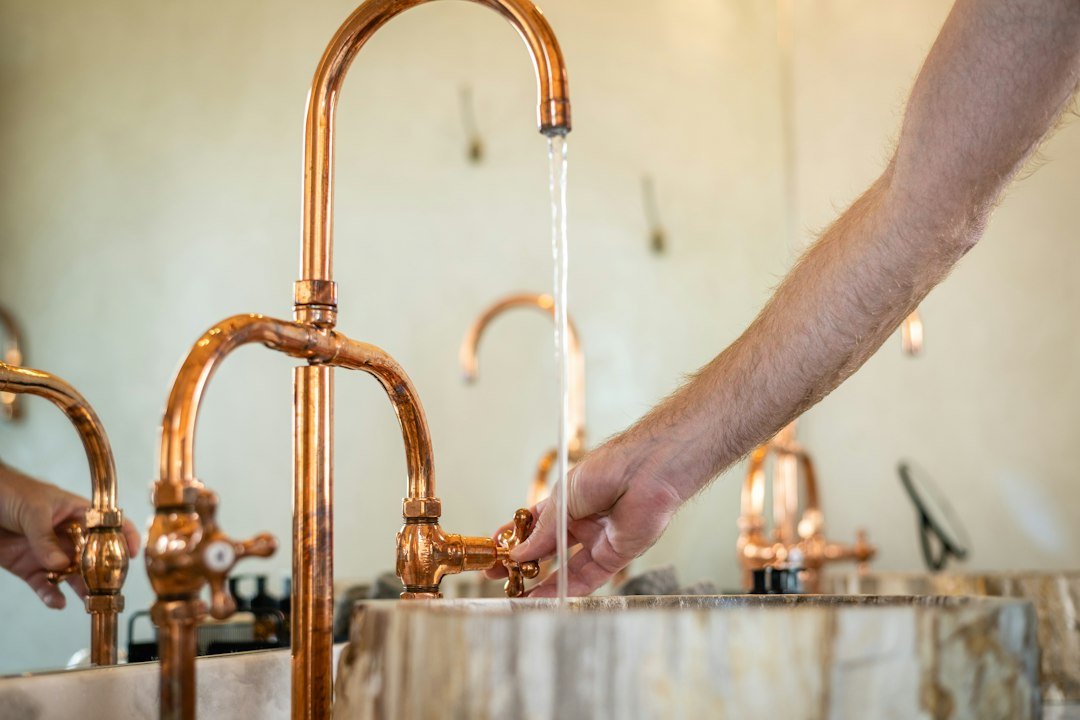
For a copper faucet, the same rules apply. Wipe the spout, handles and base with a damp soft cloth, then dry them. Pay attention to the area around the base, where water tends to collect.
Dealing with water spots, stains and bright patches
Even with good habits, marks happen. Here is how to handle the most common ones.
Water spots and mineral deposits
Hard water leaves whitish rings as it evaporates. Wipe them with a soft cloth and warm soapy water, then dry. Drying the basin regularly is the best prevention.
Bright or pink spots
Acidic foods and liquids such as lemon juice, tomato sauce, vinegar or wine can remove patina where they sit, revealing shiny, lighter copper underneath. These spots are not damage in the structural sense; on an unsealed sink, the exposed area will usually darken again over time as it oxidizes and blends back into the surrounding surface. To limit them, rinse acidic spills promptly instead of leaving them in the basin.
Green spots (verdigris)
Green deposits can form where moisture lingers, for example around the drain or the base of a faucet. Gentle washing with soapy water and thorough drying usually keeps them under control.
Keep the patina or restore the shine?
This is a matter of taste, and both choices are valid.
Keeping the patina is the low-maintenance option. You simply follow the daily routine above and let the color deepen naturally. A darker, even patina also tends to make small marks and scratches less visible.
Restoring the shine means deliberately removing the patina to bring back the bright copper color. Commercial copper cleaners, or the traditional home method of lemon juice or white vinegar combined with salt or baking soda, will do this. Keep in mind that:
- The shine will not last on unsealed copper: the surface will start to oxidize again.
- Results can be uneven if you polish only part of the sink.
- You should always test any product on a small, hidden area first and rinse and dry thoroughly afterwards.
- If your piece has a lacquer or sealant, polishing products may damage that protective layer.
Some owners apply a thin coat of a wax intended for metal or copper surfaces to add a degree of protection and slow down changes in color. If you choose to do this, follow the wax manufacturer’s instructions.
Mistakes that damage copper sinks and faucets
Most of the damage seen on copper fixtures comes from a few avoidable habits:
- Abrasive pads and scouring powders. Steel wool and rough sponges scratch the surface and remove patina unevenly.
- Harsh chemicals. Bleach, ammonia-based cleaners and drain cleaners can discolor copper. If you must use a drain product, follow its instructions carefully and rinse the basin well.
- Letting acidic food sit. A bowl of tomatoes or a lemon left in the sink overnight can leave a bright mark.
- Leaving dish racks or rubber mats in place permanently. They can trap moisture against the surface. Many owners prefer to remove them when not in use.
- Never drying the sink. Standing water is the main cause of spots and mineral buildup.
Choosing a well-made, hand-hammered piece also helps: the textured surface of hammered copper naturally makes fine scratches and small marks less noticeable than on a perfectly smooth finish. If you are looking for a sink or faucet that will develop this kind of character over the years, explore our handcrafted copper collection.
FAQ
Can I use dish soap on a copper sink?
Yes. A mild, pH-neutral dish soap with warm water and a soft cloth is the standard recommendation for daily cleaning. Rinse and dry afterwards.
Is it safe to use vinegar on copper?
Vinegar removes patina, so use it only if you want to restore the bright copper color. Test it on a hidden spot first, rinse thoroughly and dry. Avoid it if your piece is sealed or if you want to keep the natural patina.
Why does my copper sink have shiny spots?
Shiny or pink spots usually appear where something acidic has removed the patina. On unsealed copper, these areas typically darken again over time as the metal oxidizes.
How often should I clean a copper faucet?
A quick wipe and dry after daily use is ideal. A more thorough wash with mild soap once a week is enough for most households.
Can I use bleach to disinfect a copper sink?
It is best avoided, as bleach and other harsh chemicals can discolor copper. Regular washing with soap and water is the gentler option for this metal.
Conclusion
Learning how to clean a copper sink is mostly about restraint: mild soap, soft cloths, quick rinses and a habit of drying the surface. Avoid abrasives, harsh chemicals and acidic residue, decide whether you prefer a natural patina or a polished shine, and your copper sink and faucet will keep their warmth and character for many years.