Hand-hammered copper is made the slow way: a flat sheet of copper is cut, then shaped and textured by thousands of individual hammer blows instead of being pressed by a machine. Between rounds of hammering, the metal is heated to keep it workable, and every strike leaves a small facet that catches the light. In Morocco, and especially in the old medina workshops of cities like Marrakech, this craft has been passed down through generations. Here is how hand-hammered copper is made, step by step, and why no two handmade pieces are ever exactly alike.
A Craft With Deep Roots in Morocco
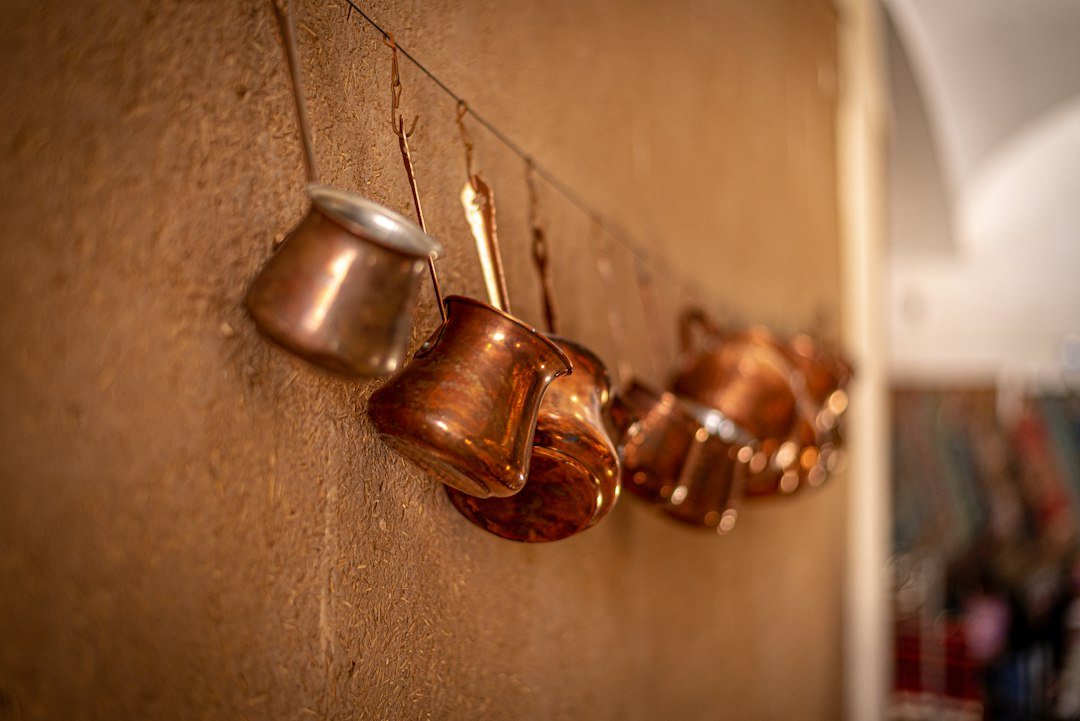
Copper is one of the oldest metals people have worked. The Copper Development Association’s history of copper traces its use back to the earliest civilizations, from Sumeria to ancient Egypt. Because pure copper is soft and malleable, it could be shaped with simple tools long before industrial machinery existed.
In Morocco, metalwork in copper and brass has long been part of everyday life: trays, teapots, lanterns, basins and cooking vessels. Marrakech, founded in the eleventh century, grew around a medina where crafts were traditionally grouped by trade in their own souks and workshops. That organization helped skills pass from master to apprentice, often within families, and it is a big reason the hand-hammering tradition is still alive today.
Step 1: Choosing and Cutting the Copper Sheet
Every piece starts as a flat sheet of copper. The artisan marks out the shape needed, a disc for a round basin or panels for a rectangular sink, and cuts it with shears. The thickness of the sheet matters: thicker copper is more durable and feels more substantial, but it takes more effort and more heating cycles to shape.
Copper is chosen for this work because it is ductile. It can be stretched, compressed and bent a great deal without cracking, which is exactly what hand-forming demands.
Step 2: Shaping by Hand, Blow by Blow
Shaping is the heart of the process. The coppersmith works the sheet over anvils, stakes, wooden forms or hollows using hammers with different face shapes, some rounded to stretch and sink the metal, others flatter to smooth and define it.
Sinking and raising
To create a bowl or basin, the artisan either hammers the sheet into a hollow so the center stretches downward (often called sinking), or works the metal over a stake so the walls are gradually drawn upward (raising). Both methods move the copper little by little, in overlapping rings of blows, until the form takes shape.
Annealing: keeping copper workable
As copper is hammered, it becomes harder and stiffer, a well-known effect called work hardening. If the artisan kept going, the metal would eventually crack. So the piece is periodically heated in a flame until it glows, then allowed to cool, a process called annealing. Annealing softens the copper again so shaping can continue. A large sink can go through many hammering and annealing cycles before it reaches its final form.
This is where experience matters most. A skilled coppersmith judges by sound, feel and sight when the metal has stiffened and needs annealing again, and where the form still needs to move. That judgment cannot be written into a machine setting; it comes from years at the anvil.
Step 3: Creating the Hand-Hammered Copper Texture
Once the shape is right, the surface is finished with a planishing hammer, a technique of controlled, closely spaced blows. This evens out the surface, stiffens the final form and creates the characteristic dimpled texture of hand-hammered copper.
The size, depth and rhythm of the hammer marks are a personal signature. Some artisans prefer large, soft facets; others work tight, small dimples. The texture is not only decorative: the many small facets scatter light, which gives hammered copper its glow, and they tend to make everyday marks less noticeable. If you are deciding whether this texture suits your home, our comparison of hammered vs smooth copper sinks covers the practical differences.
Step 4: Joining, Finishing and Patina
Some pieces are formed from a single sheet; others, such as rectangular sinks or apron fronts, are assembled from several panels. Joints are traditionally made by soldering or brazing, then dressed so the seams are clean and watertight. Drain openings, rims and edges are shaped and smoothed so they are comfortable to touch.
The final stage is the finish. After cleaning, the copper can be left bright, darkened to an aged tone, or protected with a clear coating that slows natural oxidation. Unsealed copper will continue to change color with use, developing a patina over time. To keep that patina looking its best, read our guide on how to clean a copper sink and faucet without ruining the patina.
Why Every Handmade Copper Piece Is Unique
Because each piece is formed by hand, small variations are normal and expected:
- Hammer marks differ in size and spacing from one piece to the next.
- Color and tone vary slightly depending on the copper, the heating cycles and the finish.
- Dimensions can differ by a small margin from a listed size, since no mold or press fixes the shape.
- Patina develops differently depending on water, use and cleaning habits.
These variations are the opposite of defects. They are proof that a person, not a machine, made the piece, and they are why hand-hammered copper has a depth and warmth that mass-produced fixtures rarely match.
FAQ
What does hand-hammered copper mean?
It means the copper was shaped and textured with hand-held hammers rather than pressed or spun by machine. The visible dimples on the surface are the marks of individual hammer blows.
Why is copper heated during hammering?
Hammering makes copper harder and more brittle. Heating it (annealing) softens the metal again so the artisan can keep shaping it without cracks.
Are hammer marks a sign of poor quality?
No. On hand-hammered copper, the marks are the intended texture and a sign of handwork. Quality shows in even shaping, clean joints and smooth, well-finished edges.
Will my hand-hammered copper piece look exactly like the photos?
It will be very close in shape and style, but expect small differences in texture, tone and dimensions. That is normal for handmade copper.
Does hand-hammered copper change color over time?
Unsealed copper oxidizes and gradually darkens into a patina. A clear protective coating slows this process. Gentle cleaning keeps either finish looking good.
Conclusion
Hand-hammered copper is the result of patience, skill and a tradition that has been handed down through generations of Moroccan coppersmiths. From the first cut sheet through cycles of hammering and annealing to the final planished texture, every step depends on the artisan’s hands and eye. That is why each piece carries its own character. Explore our handcrafted copper collection and see the craft up close.